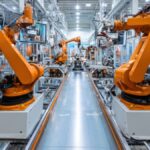

The world of work is changing very fast. New technology, especially automation and artificial intelligence (AI), is transforming almost every industry. Automation means that machines or computer programs are taking over tasks that people used to do. Think about self-checkout machines in a store or robots on a factory floor. These changes make businesses more efficient, but they also cause worry about job security.
For many workers, particularly those in jobs that involve repetitive or routine tasks, the rise of powerful technology feels like a threat. When a computer program can process a thousand documents faster and more accurately than a person, that person’s job is at risk. This shift can create a gap where some people are left behind if they do not have the right skills for the new economy. It is a major challenge for societies all around the world.
However, technology does not only destroy jobs; it creates new ones, too. The jobs that are created are often those that work with the new technology, or involve skills that machines cannot easily replicate. These new jobs need different skills than the old ones. This is where education reskilling automation comes into play as the main solution. It is the bridge that can help people move from a job that is disappearing to a new one that is growing. How exactly can education and learning new skills help us successfully navigate the wave of automation?
Why are some jobs being lost because of automation?
Automation is the process of using machines, software, or technology to perform tasks with minimal human input. The biggest reason jobs are lost is simple: efficiency. For businesses, machines are often faster, more accurate, and can work non-stop without needing breaks or a salary. When a machine can do a task better and cheaper, companies will naturally choose the machine. This is an economic reality.
Jobs that involve tasks that are very routine and predictable are the most likely to be automated. For example, a data entry clerk who spends all day typing information from paper into a computer is doing a routine task. An AI program can now read that paper and input the data automatically. Another example is a factory worker whose main job is to put one part onto another part on an assembly line. A robot can be programmed to do that task perfectly every single time.
It is important to understand that automation often replaces a task, not necessarily a whole job. However, if most of the tasks in a person’s job become automated, then the whole job can disappear. This affects many industries, from manufacturing and logistics to office and clerical work. The people who are most at risk often have lower levels of formal education or have worked in the same routine role for many years, making the shift to a new career especially difficult.
How can education help workers avoid losing their jobs to automation?
Education is the most powerful tool we have to fight the negative effects of automation. It helps workers in two main ways: by helping them get new jobs and by changing the way they work in their current jobs. The key is moving away from routine, predictable skills toward skills that complement the new technology.
The first way is through upskilling. This means learning new skills related to your current job to make yourself better and more valuable. For a store manager, instead of being replaced by self-checkout, they might be upskilled to manage the new inventory and data systems that the self-checkout machines produce. They become the person who makes decisions based on the technology, rather than the person the technology replaces. Upskilling helps people stay relevant in their existing careers.
The second way is through reskilling. This is for people whose entire job is at risk. Reskilling means getting completely new training for a different career field. Someone who worked as a truck driver might reskill to become a solar panel installer or a wind turbine technician. Automation has little effect on these jobs, and they are in high demand in the growing green energy sector. Reskilling is a big step, but it offers a chance for a whole new career path with better long-term security.
What kind of new skills are most needed in a world with more automation?
As machines take over routine and technical tasks, the demand for uniquely human skills goes up. These are the skills that robots and AI still struggle to master. We call these “human-centric” or “power skills.”
One of the most important skills is complex problem-solving. When an automated system breaks down, a human has to step in to figure out why and find a solution that the machine was not programmed for. Another critical skill is creativity. Machines are good at following rules, but they cannot invent a new product, write an inspiring advertisement, or design a beautiful building without human direction.
Interpersonal and communication skills are also in extremely high demand. This includes things like leadership, negotiation, customer service, and emotional intelligence. People still want to talk to other people, especially when dealing with complex or sensitive issues like healthcare, management, or sales. A good manager who can motivate a team and handle difficult conversations will always be valuable, even with AI assistants helping with office tasks.
Finally, there is a clear need for digital literacy and data interpretation. This does not mean everyone has to be a programmer, but everyone will need to be comfortable using digital tools and understanding basic data. A factory worker might not build the robot, but they need to know how to read the data the robot produces to check for quality or efficiency. This technical know-how is the bridge between the human worker and the automated system.
How does learning new skills (reskilling) actually work for older workers?
The idea of going back to school can feel scary, especially for older workers who have been out of a formal classroom for decades. However, the world of education has changed to make reskilling more accessible than ever before. It no longer requires a four-year college commitment.
Many organizations, companies, and community colleges now offer short, targeted training programs. These programs focus only on the skills needed for a new job, offering certificates or digital badges instead of a full degree. They are often much faster, sometimes taking only a few months. For example, a person might take a three-month course to become a certified medical billing specialist or a six-month course for a cybersecurity analyst role.
The focus is shifting to lifelong learning. The expectation that one set of skills will last an entire 40-year career is no longer realistic. Workers need to view their career as a constant journey of learning and adapting. This means taking an online course, completing an apprenticeship, or getting a quick certification every few years to stay current. Governments and companies are starting to offer financial support for these programs, recognizing that a skilled workforce benefits everyone in the economy.
How can employers be encouraged to invest in reskilling their workers?
For a company facing automation, it might seem easier and cheaper to simply lay off existing workers and hire new ones with the needed skills. This is often the immediate thought, but it can be a costly mistake in the long run. There are several ways to encourage employers to see the value in reskilling their own people.
First, the government can offer tax credits and financial incentives. By giving companies a tax break for every worker they successfully retrain, the government makes reskilling cheaper than firing and hiring. This financial nudge helps businesses see the long-term investment value. It costs less to train a loyal, experienced employee than to recruit and train a completely new one who may or may not be a good fit for the company culture.
Second, employers realize that their current workers already have valuable company knowledge and experience. A factory worker who knows the history of the production line will be much better at maintaining a new automated system than a new hire who only has a technical certificate. Reskilling retains this institutional knowledge. It is much wiser to teach a trusted employee a new technical skill than to let all that internal expertise walk out the door.
Finally, investing in people builds employee loyalty and morale. Workers who feel that their employer is committed to their future are happier, more productive, and less likely to leave. Companies that offer upskilling programs become more attractive places to work, which helps them recruit and keep the best talent. It is a smart business move that shows a commitment to people over short-term savings.
What role does basic education play in preparing for an automated future?
While reskilling and upskilling focus on older workers, basic education sets the stage for a future-ready workforce. The skills taught in school need to change to match the demands of the automated workplace. The focus must shift from memorization to practical application and critical thought.
A strong foundation in Science, Technology, Engineering, and Math (STEM) remains essential. This does not mean every person must become an engineer. It means teaching people to think logically, understand how technology works, and be comfortable with data. These basic skills are the building blocks for all later technical training.
Just as important is the focus on general skills. The new education model should emphasize skills that are transferable across many different jobs. This includes learning how to learn, adaptability, communication, and emotional intelligence. If someone learns how to be a critical thinker in a history class, that skill will help them solve a complex issue in a new tech job. Education should be about building a flexible mind that can adapt to rapid change, not just filling the mind with facts that a machine can easily look up.
This new approach also means promoting lifelong learning from an early age. Education is no longer a one-time event that ends at age 18 or 22. It is a continuous process. Schools need to teach people that they will need to reinvent their skills multiple times during their career. This mental preparation is a key part of future job security.
Can governments create policies to support workers through automation and reskilling?
Yes, governments have a crucial role to play in smoothing the transition that automation creates. Without government action, the job losses could lead to higher inequality and social unrest. Policies need to focus on support and access to education.
One important policy is creating universal access to affordable training programs. This could be done through financial support for community colleges, or by setting up worker retraining accounts. These accounts would be like retirement savings but for education, allowing workers to set aside money tax-free to pay for future training. This makes the responsibility of learning a shared one between the worker and the government.
Governments can also focus on strengthening social safety nets. When a person loses a job to automation, they need time to reskill without facing extreme financial hardship. Policies like extended unemployment benefits linked to mandatory training, or even wage insurance that replaces a portion of lost income, can provide a cushion. This allows a displaced worker to focus on their education instead of immediately taking a low-paying job out of desperation.
Finally, governments must improve the link between education and the labor market. Education programs need to train people for jobs that actually exist and are growing. This means working closely with businesses to understand their future needs and then quickly adjusting the courses offered in schools and training centers. A strong partnership between government, schools, and industry is key to making sure that reskilling leads to real jobs.
Conclusion
The march of automation is unstoppable, but it is not a threat we must face with fear. Instead, we should see it as a powerful opportunity to reshape our economy and create better, more human-centered jobs. The main tool for this transformation is the combination of education reskilling automation. By committing to continuous learning, we can turn a moment of fear into a chance for growth.
Automation replaces routine tasks, but it desperately needs human skills like creativity, problem-solving, and emotional connection. Education and reskilling are the ways we can all gain those in-demand skills. Whether it is a few months of technical training or a full career change, embracing lifelong learning is the new job security. If workers, employers, and governments all invest in this educational bridge, the future of work will be a story of human potential being amplified, not replaced, by technology. What steps will you take today to secure your place in the automated future?
FAQs – People Also Ask
What is the difference between upskilling and reskilling in the context of automation?
Upskilling involves improving a worker’s current skills to make them more effective in their existing role, especially by adding new digital or automation-related knowledge. Reskilling is the process of training a worker for a completely new job or career field, often when their current job is at high risk of being eliminated by technology. Both are forms of continuous learning.
Which job roles are at the highest risk of being replaced by automation?
Jobs that involve highly repetitive, predictable, or routine tasks are most at risk. This includes roles like data entry clerks, cashiers, administrative assistants, and some types of factory or assembly line workers. Any job where the tasks can be described with a simple step-by-step procedure is highly susceptible to automation.
What non-technical skills are important for job security in the age of AI?
Non-technical skills, often called soft skills or power skills, are crucial. These include creative thinking, complex problem-solving, critical judgment, communication, and emotional intelligence. These are the human-centric abilities that machines struggle to replicate and are needed for collaboration and high-level decision-making.
How can I find affordable reskilling programs for a new career?
You can look for programs offered by your local community colleges, vocational schools, and technical centers, which often have lower costs. Many large technology companies and online learning platforms also offer free or low-cost certifications and short courses focused on high-demand skills like data analysis and coding.
Do businesses save money by reskilling their current employees?
In the long run, businesses often find that reskilling saves money. While initial training has a cost, retaining an existing employee means the company does not lose their valuable experience and does not have to pay for the high cost of recruiting, interviewing, and fully onboarding a brand-new hire.
Is formal university education still necessary for jobs in an automated world?
While a university degree is still valuable, it is no longer the only path. Short-term, targeted training like certifications, apprenticeships, and boot camps are becoming increasingly popular. The most important thing is having the right, up-to-date skills, not just the highest level of formal degree.
How does reskilling help to reduce economic inequality?
Automation often affects lower-skilled, lower-wage jobs, leading to wage polarization and increased inequality. Reskilling helps by moving workers from these at-risk roles into new, higher-skilled, and better-paying jobs that complement technology, which helps to close the income gap and create a more stable middle class.
What is ‘lifelong learning’ and why is it important now?
Lifelong learning is the idea that education is a continuous process throughout a person’s entire working life, not something that stops after school. It is important because the speed of technological change means that skills become outdated very quickly, requiring workers to constantly update their knowledge to stay relevant in the job market.
What role can governments play in helping finance worker training?
Governments can help finance training through several methods. These include providing subsidies for educational institutions, offering tax credits to companies that retrain their staff, and creating individual worker retraining accounts, which allow people to save for their future education on a tax-deferred basis.
What are ‘AI-complementary skills’ and what is an example?
AI-complementary skills are those that allow a worker to use or manage AI tools to be more effective, rather than being replaced by the AI. An example would be a marketing professional who uses an AI program to generate ad copy, but then uses their own creativity and judgment to edit the final text and plan the overall campaign strategy.